For USPS employees, getting injured or becoming ill can create immediate uncertainty about income. Along with medical recovery, you may suddenly be navigating unfamiliar paperwork, acronyms, and timelines that directly affect whether and when you get paid. Two of the most important forms in this process are CA-1 and CA-2.
Understanding which form to file—and when—matters because it shapes how your claim is reviewed, what pay options may be available, and how your absence from work is classified. This article explains the difference between CA-1 and CA-2 in clear, practical terms, with a focus on income protection during injury or illness.
Why CA-1 and CA-2 matter for USPS employees
When a USPS employee experiences a work-related injury or illness, the federal workers’ compensation system administered by the Office of Workers’ Compensation Programs (OWCP) determines eligibility for benefits. CA-1 and CA-2 are the starting point for that process.
The form you file helps OWCP understand:
- Whether the condition resulted from a single event or developed over time
- When your condition began
- How your injury or illness relates to your job duties
- What type of income protection may apply in the early stages of your claim
Filing the correct form early can reduce confusion, delays, and gaps in pay while your claim is reviewed.
Understanding the CA-1 form
What is CA-1?
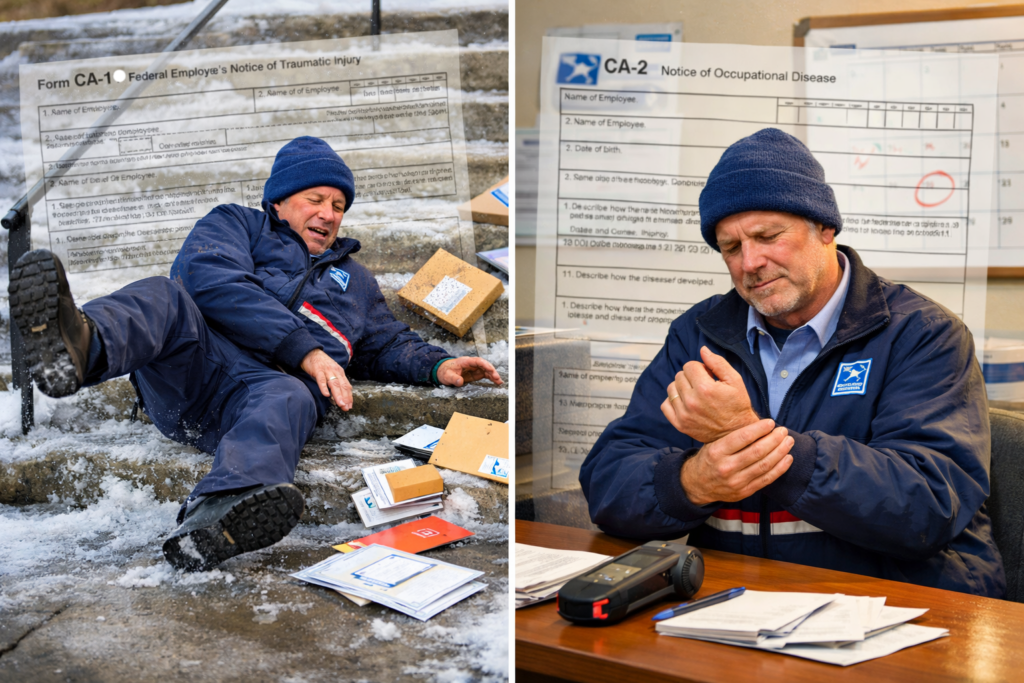
CA-1 is the form used to report a traumatic injury. In workers’ compensation terms, a traumatic injury is caused by a specific event or incident that occurred during a single work shift.
Examples include:
- Slipping on a wet floor while delivering mail
- Being struck by a vehicle while on duty
- Lifting a heavy package and immediately injuring your back or shoulder
The key factor is that the injury can be tied to one identifiable moment in time.
When should you file CA-1?
CA-1 should be filed as soon as possible after the injury occurs. For USPS employees, timely filing is especially important because it may affect eligibility for Continuation of Pay (COP).
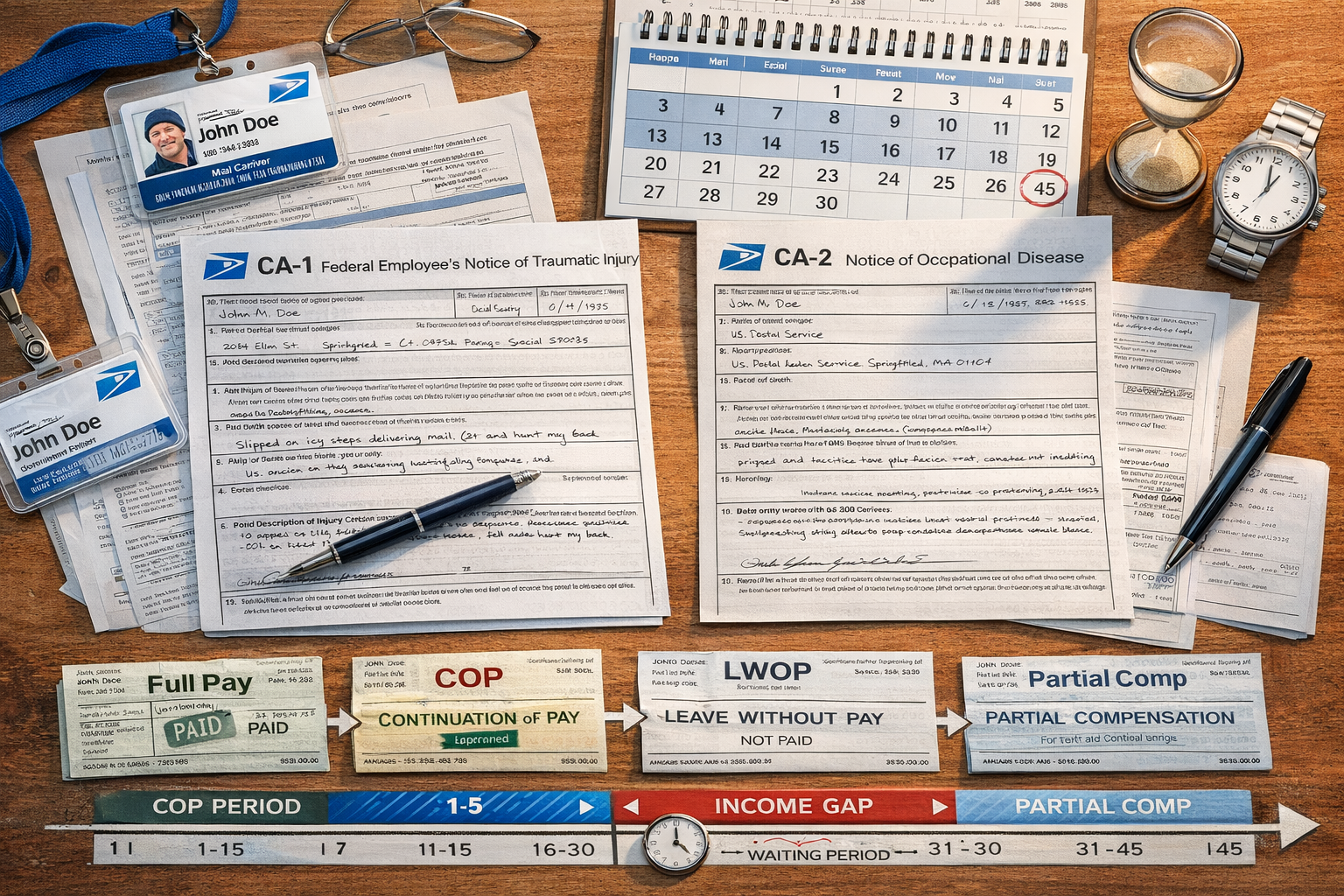
COP allows eligible employees to receive their regular pay for up to 45 calendar days following a traumatic injury, without using sick leave or annual leave. To qualify, the injury must be reported promptly and meet specific criteria.
How CA-1 connects to income
If approved, CA-1 claims may allow:
- Immediate medical treatment authorization
- Potential access to COP during the first 45 days
- A smoother transition to wage-loss compensation if time off extends beyond COP
If your injury prevents you from working beyond the COP period, your pay status may shift to Leave Without Pay (LWOP) while OWCP reviews ongoing benefits.
Understanding the CA-2 form
What is CA-2?
CA-2 is used to report an occupational disease or illness. These conditions develop over time due to repeated exposure or repetitive work activities, rather than a single incident.
Common examples among USPS employees include:
- Carpal tunnel syndrome from repetitive scanning or sorting
- Knee or hip problems from prolonged walking routes
- Respiratory conditions linked to long-term exposure to dust or fumes
Unlike traumatic injuries, occupational illnesses often do not have a clear start date.
When should you file CA-2?
CA-2 should be filed when:
- A medical provider identifies your condition as work-related
- Symptoms have progressed to the point of affecting your ability to work
- You receive a diagnosis linking the condition to your job duties
Because occupational illnesses develop gradually, delays in filing are common—but waiting too long can complicate documentation and income continuity.
How CA-2 affects pay status
CA-2 claims do not qualify for Continuation of Pay. This is one of the most important differences between CA-1 and CA-2.
Instead, USPS employees filing CA-2 may need to:
- Use sick leave or annual leave initially
- Enter LWOP status while the claim is reviewed
- Wait for OWCP wage-loss compensation approval if time off continues
This gap can create financial strain if alternative income protection is not in place.
Key differences between CA-1 and CA-2
Understanding the distinctions helps clarify why choosing the correct form matters.
Type of condition
- CA-1: Sudden, traumatic injury from a single event
- CA-2: Illness or condition developed over time
Timing of injury or illness
- CA-1: Occurs during one work shift
- CA-2: Develops gradually over weeks, months, or years
Continuation of Pay eligibility
- CA-1: May qualify for up to 45 days of COP
- CA-2: COP is not available
Documentation focus
- CA-1: Incident reports, witness statements, immediate medical findings
- CA-2: Medical history, job duty analysis, long-term exposure evidence
Step-by-step: What happens after you file
Step 1: Submission through USPS
USPS employees typically file CA-1 or CA-2 through internal reporting systems, with supervisory review included. Accuracy matters—dates, descriptions, and medical details should align.
Step 2: Medical evaluation
A medical provider must document:
- Diagnosis
- Work-related cause
- Functional limitations
- Expected duration of disability
This medical evidence plays a major role in OWCP decisions.
Step 3: OWCP review
OWCP evaluates whether:
- The condition is work-related
- The form filed matches the type of injury or illness
- Medical evidence supports time away from work
During this period, employees may be placed on LWOP if COP or leave balances are exhausted.
Step 4: Income determination
If wage-loss benefits are approved, OWCP compensation may replace a portion of lost income, though approval timelines can vary and temporary pay gaps may occur during review. The U.S. Department of Labor oversees the OWCP process and sets the rules that determine how claims are evaluated and paid.
Common filing mistakes to avoid
Even experienced USPS employees can run into issues when dealing with injury-related forms.
Filing CA-1 for a long-term condition
Using CA-1 for a condition that developed over time may result in delays or denial, especially if medical evidence does not support a single incident.
Delaying CA-2 filing
Waiting too long to file CA-2 can make it harder to establish a work-related connection, especially if job duties have changed.
Incomplete medical documentation
OWCP decisions rely heavily on medical records. Missing details about work limitations or causation can slow income replacement.
Assuming income is automatic
Neither CA-1 nor CA-2 guarantees immediate or full income replacement. Understanding potential gaps is critical for financial planning.
Why income gaps matter during recovery
USPS employees often assume federal benefits will cover all lost income during disability. In reality, timing issues, eligibility rules, and claim reviews can create periods with reduced or no pay.
These gaps may occur:
- After COP ends on CA-1 claims
- During initial CA-2 claim review
- When LWOP begins before wage-loss approval
Knowing which form applies—and what it does not cover—helps employees plan more realistically during recovery.
How CA-1 and CA-2 fit into broader income protection
CA-1 and CA-2 are essential for initiating federal workers’ compensation claims, but they are only one part of the income picture. Many USPS employees evaluate how these benefits interact with other disability income protection options, especially when recovery timelines are uncertain.
Understanding the limits, timelines, and pay status changes associated with each form allows for more informed decisions during a physically and financially stressful time.
Final thoughts
CA-1 and CA-2 serve different purposes, and filing the correct form is one of the first steps toward protecting your income after a work-related injury or illness. The key distinction comes down to how and when the condition occurred—sudden versus gradual—and that difference affects pay options, documentation, and timing.
If you’re dealing with a work-related injury or illness as a USPS employee, understanding how CA-1 and CA-2 work—and how disability income protection fits alongside these benefits—can reduce uncertainty and help you better prepare for the financial side of recovery.