

Life insurance is one of the most important financial protections available to postal employees, yet it’s also one of the most misunderstood. Many USPS workers assume the coverage they receive automatically is enough, or they postpone learning about their options until retirement is close. Unfortunately, waiting too long or relying on assumptions can leave serious gaps in protection for your family.
This guide explains life insurance benefits in plain language, specifically for USPS employees, retirees, and their families. The goal is not to sell policies or suggest coverage amounts, but to help you clearly understand how postal life insurance works, what it does well, where limitations exist, and why reviewing your options at different career stages matters.
Why Life Insurance Matters for USPS Employees
Life insurance is designed to provide financial support to your loved ones if you pass away. For postal employees, this protection plays a critical role because your income often supports long-term commitments like mortgages, education costs, medical expenses, and retirement plans for a spouse.
Many USPS employees work physically demanding jobs, and others remain in service for decades. Over time, family responsibilities change. Children grow, debts shift, and retirement income replaces wages. Life insurance should adapt alongside those changes, but default coverage often stays the same unless you take action.
Understanding your benefits early gives you more control and helps prevent difficult surprises later.
Basic Life Insurance Coverage Through USPS Employment
Most career postal employees are covered under a federal life insurance program tied to their employment. This coverage provides a foundation, but it’s important to understand what it includes and what it does not.
How Federal Life Insurance Coverage Works
When you become eligible as a career USPS employee, basic life insurance coverage is generally provided automatically unless you decline it. The value of this coverage is typically linked to your salary, with a small additional amount added.
Premiums are shared between you and the federal government, which makes this coverage relatively affordable during active employment. Because enrollment is automatic for many employees, some people never fully review the details.
What This Coverage Is Designed to Do
This basic coverage is intended to provide short-term income protection for survivors if an employee passes away while working. It can help cover immediate expenses such as funeral costs, unpaid bills, or short-term living expenses.
However, it is not designed to replace long-term income or provide comprehensive family protection on its own.

Optional Life Insurance Coverage and Key Limitations
In addition to basic coverage, postal employees may have access to optional life insurance choices. These options allow employees to increase coverage, but they come with important limitations that are often overlooked.
Optional Coverage Is Tied to Employment Status
Optional coverage is usually connected to your employment. As long as you are actively working and paying premiums, the coverage remains in force. When you retire, reduce hours, or leave service, coverage may change, become more expensive, or gradually decrease.
This is one of the most common points of confusion for USPS employees approaching retirement.
Premiums Increase With Age
While basic coverage is partially subsidized, optional life insurance premiums typically increase as you get older. Many employees don’t notice these increases early because they happen gradually. Over time, the cost can become significantly higher, especially after age 50.
Understanding how age-based premiums work is essential for long-term planning.
Coverage May Reduce Later in Life
Some federal life insurance options reduce automatically at certain ages unless you choose to pay higher premiums to maintain the full amount. This reduction can happen at the exact time when families expect coverage to be stable.
Without careful planning, beneficiaries may receive far less than expected.
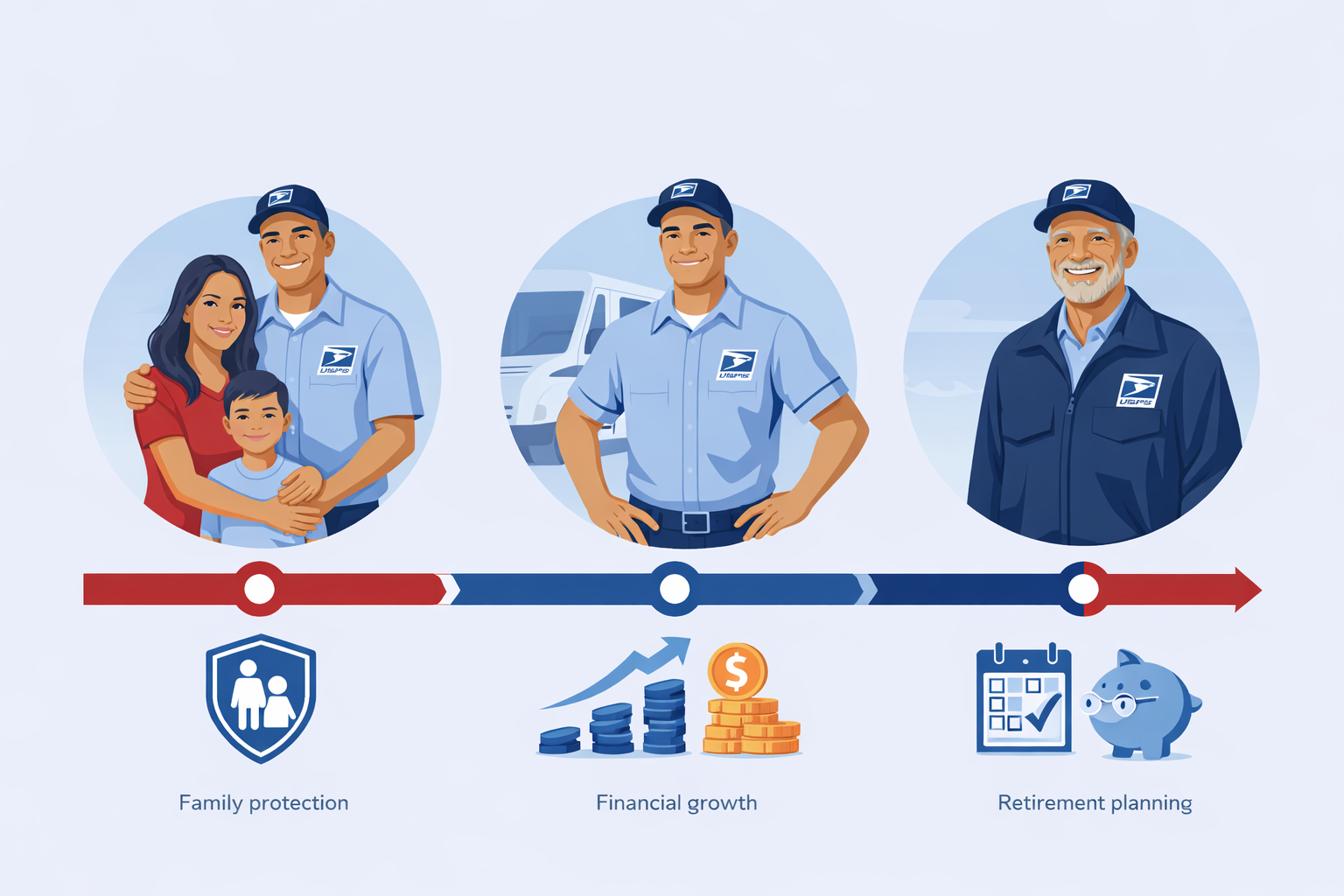
Life Insurance Needs Change Over a Postal Career
One of the biggest misconceptions about life insurance is that you can set it once and never revisit it. For postal employees, needs typically evolve through several distinct stages.
Early Career Postal Employees
Newer employees often have lower salaries but higher financial vulnerability. Student loans, young families, or a single income household can make life insurance especially important during this stage.
Basic coverage may help, but it often does not fully address long-term family needs.
Mid-Career and Peak Earning Years
As income grows, so do responsibilities. Mortgages, college savings, and long-term care for aging parents can all increase financial pressure. During this stage, relying solely on employment-based coverage may not reflect the full scope of your obligations.
This is often the best time to review how existing benefits align with real-world needs.
Approaching Retirement and After Separation
Retirement brings major changes. Income sources shift from wages to pensions, savings, and Social Security. Some life insurance coverage reduces or becomes more expensive, while family members may still rely on financial support.
Understanding how your life insurance behaves after retirement is critical for protecting surviving spouses and ensuring estate plans stay intact.
How Life Insurance Interacts With Other USPS Benefits
Life insurance does not exist in isolation. It works alongside other federal and postal benefits, and understanding these interactions helps you make better decisions.
Retirement and Survivor Benefits
USPS retirees may be eligible for survivor benefits through federal retirement systems. These benefits can provide ongoing income to a spouse, but they may not cover all expenses or debts.
Life insurance can help bridge the gap between survivor income and actual household needs.
Health and Disability Coverage
If a serious illness or injury occurs before death, disability benefits may replace a portion of income, but they do not eliminate financial strain. Life insurance planning often considers these risks together to create more balanced protection.
Common Misunderstandings About USPS Life Insurance
Postal employees often share similar misconceptions about life insurance. Clearing these up can prevent costly mistakes.
“My Coverage Is Enough Because It’s From the Government”
Government-provided benefits are valuable, but they are not automatically comprehensive. Federal life insurance was designed as a base, not a full solution for every family.
“I Can Adjust Everything When I Retire”
Some options become limited or unavailable after certain deadlines. Waiting until retirement may reduce flexibility and increase costs.
“If I’m Healthy, I Don’t Need to Review My Coverage”
Health status affects future options, not current needs. Reviewing coverage while healthy provides more clarity and choice.
Why Periodic Life Insurance Reviews Matter
Life insurance reviews are not about purchasing new policies. They are about understanding what you already have and how it aligns with your current situation.
A review typically looks at:
- What coverage exists today
- How that coverage changes with age or retirement
- Whether beneficiaries are up to date
- How benefits coordinate with retirement and survivor income
Even a simple review can uncover gaps or outdated assumptions.
Trusted Government Resources for USPS Employees
For official guidance on federal benefits, USPS employees can consult authoritative government sources. The U.S. Office of Personnel Management provides detailed explanations of federal employee insurance programs and benefit rules.
Final Thoughts for Postal Employees and Families
Life insurance is not about predicting the future. It’s about understanding your benefits today so your family is protected no matter what tomorrow brings. USPS employees are fortunate to have access to federal benefits, but those benefits work best when they are clearly understood and periodically reviewed.
Taking time to learn how your life insurance works is a practical step toward long-term financial stability for the people who depend on you.
If you’re a USPS employee or retiree and want a clearer understanding of how your current life insurance benefits work, a personalized review can help you see how everything fits together. Learning where coverage is strong and where questions remain allows you to make informed decisions at your own pace. A simple review can provide clarity without pressure.