
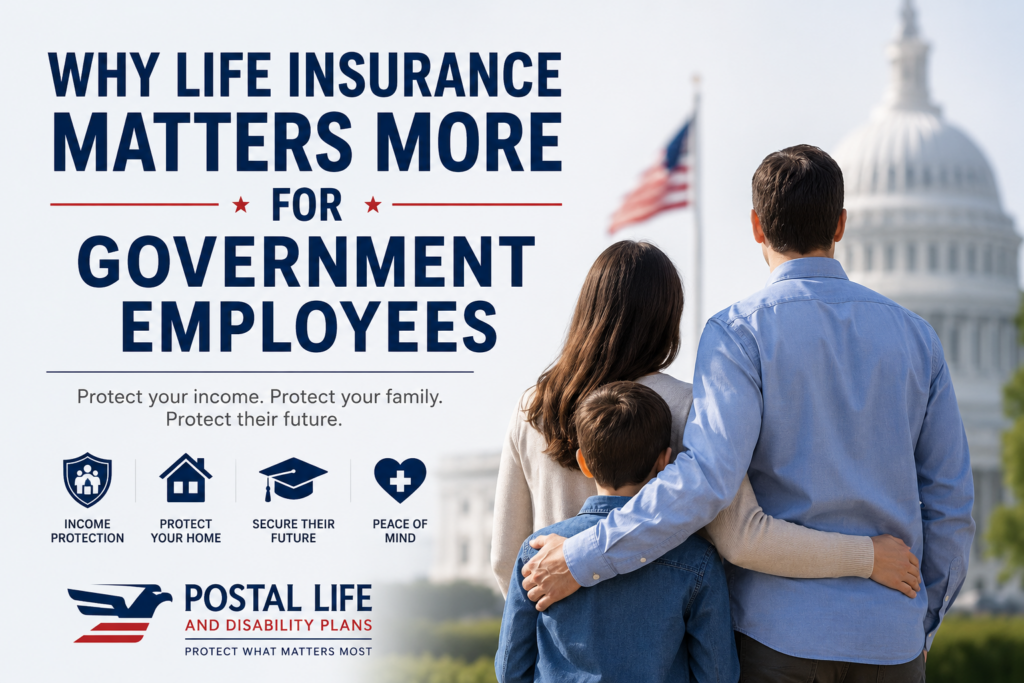
Government employees often have access to steady pay, strong benefits, retirement plans, and workplace protections that many private-sector workers do not. Because of that, it is easy to assume that a government job automatically means a family is financially protected.
But when it comes to life insurance, that assumption can be risky.
Life insurance matters for everyone with loved ones who depend on them. For government employees, it can matter even more because their income, benefits, pension expectations, and family financial plans are often deeply connected to long-term public service. If something unexpected happens, the financial gap left behind can be much larger than many families realize.
At Postal Life and Disability Plans, we work with postal and government employees who want to better understand their coverage options and protect the people who rely on them most. Life insurance is not just another benefit. It is a financial safety net that can help protect a family’s home, income, future plans, and peace of mind.
Government Benefits Are Helpful, But They May Not Be Enough
One of the biggest mistakes government employees can make is assuming that their workplace benefits will fully protect their family if they pass away.
Many federal and government workers have access to employer-sponsored life insurance, retirement benefits, survivor benefits, and other forms of workplace protection. These benefits can be valuable, but they may not be designed to cover every financial need a family will face.
For example, a basic workplace life insurance policy may only provide a limited amount of coverage. That amount may seem helpful on paper, but it can disappear quickly once a family starts paying for funeral costs, mortgage payments, credit card debt, childcare, daily living expenses, and future education costs.
A surviving spouse or family member may also need time to adjust financially. Even when survivor benefits are available, they may not replace the full income that was lost. This is where additional life insurance can play an important role.
The goal is not just to have some coverage. The goal is to have enough coverage to give your family real options during one of the hardest times of their lives.
A Government Paycheck Often Supports More Than One Person
For many government employees, their paycheck does more than cover personal expenses. It may support a spouse, children, aging parents, or other family members.
That steady income may be used to pay for:
- Mortgage or rent
- Utilities and household bills
- Groceries and transportation
- Childcare
- Medical expenses
- School costs
- Family debt
- Retirement savings
- Support for parents or relatives
If that income suddenly stops, the financial impact can be immediate.
This is why life insurance matters so much. It helps replace income and gives loved ones money they can use to keep life as stable as possible. While no policy can replace a person, the right coverage can help prevent a family from having to make painful financial decisions right away.
Without enough life insurance, a family may be forced to sell a home, take on debt, pause education plans, or reduce their standard of living. With proper coverage, they may have more time, flexibility, and financial breathing room.
Your Pension and Retirement Plans May Not Fully Protect Your Family
Government employees often build long-term financial plans around retirement benefits. After years of service, those benefits can become a major part of the family’s future.
But retirement benefits do not always work the same way after death.
Depending on your employment status, years of service, plan rules, survivor elections, and family situation, your loved ones may not receive the full value of what you expected. Some benefits may be reduced. Others may depend on specific eligibility requirements.
This is especially important for employees who are still working and have not yet reached retirement. If something happens before retirement benefits are fully available, your family may face a financial gap.
Life insurance can help fill that gap. It provides a separate source of money that can be used by your beneficiaries according to their needs. That may include replacing income, paying off debt, covering final expenses, or protecting long-term family goals.
Life Insurance Can Help Protect the Family Home
For many families, the home is the biggest financial responsibility they have.
A mortgage may have been affordable with two incomes or with one steady government income. But if that income disappears, the surviving family may struggle to keep up with monthly payments.
Life insurance can help protect the home by giving your loved ones money to continue making payments or even pay down the mortgage. This can be especially important for families with children, a surviving spouse, or dependents who need stability.
Losing a loved one is already emotionally devastating. Losing the family home on top of that can make the situation even harder. Proper life insurance coverage can help reduce that risk.
Final Expenses Can Be Higher Than Expected
Many families underestimate the cost of final expenses.
Funeral services, burial or cremation, travel, legal paperwork, and immediate household costs can add up quickly. Even a modest funeral can place a financial burden on loved ones if there is no money set aside.
Life insurance can help cover these costs so that family members are not forced to use savings, credit cards, or loans during an already difficult time.
This is one of the simplest reasons to have coverage: your family should not have to worry about how to pay final expenses while they are grieving.
Life Insurance Gives Families Time to Make Decisions
When a government employee passes away, the surviving family may have to deal with many things at once. They may need to contact agencies, review benefits, update accounts, handle legal documents, and make major financial decisions.
Without enough money available, those decisions may become urgent. A surviving spouse may feel pressure to sell assets, move homes, borrow money, or return to work immediately.
Life insurance helps create time.
It gives the family room to breathe, organize paperwork, understand available benefits, and make thoughtful decisions instead of rushed ones. That time can be just as valuable as the money itself.
Younger Government Employees Should Not Wait Too Long
Many younger government employees assume life insurance is something to think about later.
But waiting can make coverage more expensive. Life insurance is generally easier to qualify for when you are younger and healthier. As you age, develop health conditions, or take on more responsibilities, the need for coverage may increase while the cost may also rise.
Younger employees may also have major financial responsibilities already, such as:
- A mortgage
- Student loans
- Young children
- A spouse who depends on their income
- Car loans
- Credit card debt
- Parents or relatives they support
Getting coverage earlier can help lock in protection before life becomes more complicated.
Employees With Families May Need More Than Basic Coverage
If you have a spouse, children, or anyone who depends on your income, basic workplace coverage may not be enough.
A common question is: “How much life insurance do I actually need?”
There is no one-size-fits-all answer, but a good starting point is to think about what your family would need if your income were no longer there. This may include:
- Several years of income replacement
- Mortgage protection
- Childcare costs
- Education expenses
- Final expenses
- Debt payoff
- Emergency savings for your family
- Support for a surviving spouse
The right amount depends on your income, family size, debt, savings, and long-term goals. The important thing is to look at your real numbers instead of guessing.
Life Insurance Can Support a Surviving Spouse
A surviving spouse may face both emotional and financial stress.
They may have to manage household bills alone, care for children, handle paperwork, and adjust to a new financial reality. Even if they work, losing a second income can change everything.
Life insurance can help a surviving spouse maintain stability. It may allow them to stay in the home, take time away from work, pay for childcare, or avoid draining retirement savings.
For many families, life insurance is not just about replacing income. It is about protecting the surviving spouse from being forced into immediate financial hardship.
Life Insurance Can Protect Children’s Futures
For parents, life insurance is one of the most important ways to protect a child’s future.
If something happens to you, your children may still need support for school, housing, food, healthcare, activities, and future education. Life insurance can help provide money for those needs.
It can also help preserve plans you already had in place. Maybe you wanted to help pay for college, support your child through early adulthood, or make sure they had a stable home. Life insurance can help keep those plans alive, even if you are no longer there to provide that support directly.
Government Employees Should Review Coverage After Major Life Changes
Life insurance is not something you should set once and forget.
Your coverage needs can change over time. A policy that made sense five years ago may not be enough today.
You should consider reviewing your life insurance after major life events such as:
- Getting married
- Having a child
- Buying a home
- Taking on new debt
- Getting promoted
- Changing jobs
- Going through divorce
- Supporting aging parents
- Approaching retirement
- Experiencing health changes
A regular review can help make sure your coverage still matches your life.
Life Insurance Adds a Layer of Protection Beyond Work Benefits
Workplace benefits are important, but they are still connected to your employment. If you retire, change jobs, reduce hours, or experience changes in eligibility, your coverage may change too.
Having additional life insurance outside of basic employer coverage can give you more control. It may help ensure your family has protection that is not only tied to one workplace benefit.
For government employees, this extra layer of protection can be valuable because family financial plans are often built around long-term employment and retirement expectations. Life insurance helps protect those plans from unexpected disruption.
Peace of Mind Is Part of the Value
Life insurance is not only about numbers. It is also about peace of mind.
When you know your family has protection, you can feel more confident that they will have support if something happens to you. That peace of mind can matter whether you are early in your government career, close to retirement, raising children, or helping support a spouse or parent.
No one likes thinking about death. But planning ahead is an act of care. It is one of the ways you can continue protecting your family, even in a situation you hope never happens.
How Postal Life and Disability Plans Can Help
At Postal Life and Disability Plans, we help postal and government employees better understand their life insurance and disability protection options.
Our goal is to make the process simple, clear, and practical. We understand that government employees often have unique benefits, responsibilities, and questions. We help you look at your situation and consider what kind of protection may make sense for your family.
Whether you already have basic coverage through work or you are starting from the beginning, it is worth reviewing your options. You may find that your current coverage is enough, or you may discover important gaps that should be addressed.
Final Thoughts
Life insurance matters for government employees because a steady job does not automatically mean a family is fully protected.
Your income may support your home, spouse, children, parents, debts, and future plans. If something unexpected happens, your loved ones may need more than basic workplace benefits to stay financially secure.
The right life insurance coverage can help replace income, protect the family home, cover final expenses, support children, and give loved ones time to make decisions. Most importantly, it can provide peace of mind knowing that your family has a financial safety net.
If you are a government employee, now is a good time to review your life insurance needs. A simple conversation today can help protect the people who matter most tomorrow.
To learn more about your options, contact Postal Life and Disability Plans and request a life insurance quote designed around your needs as a government employee.