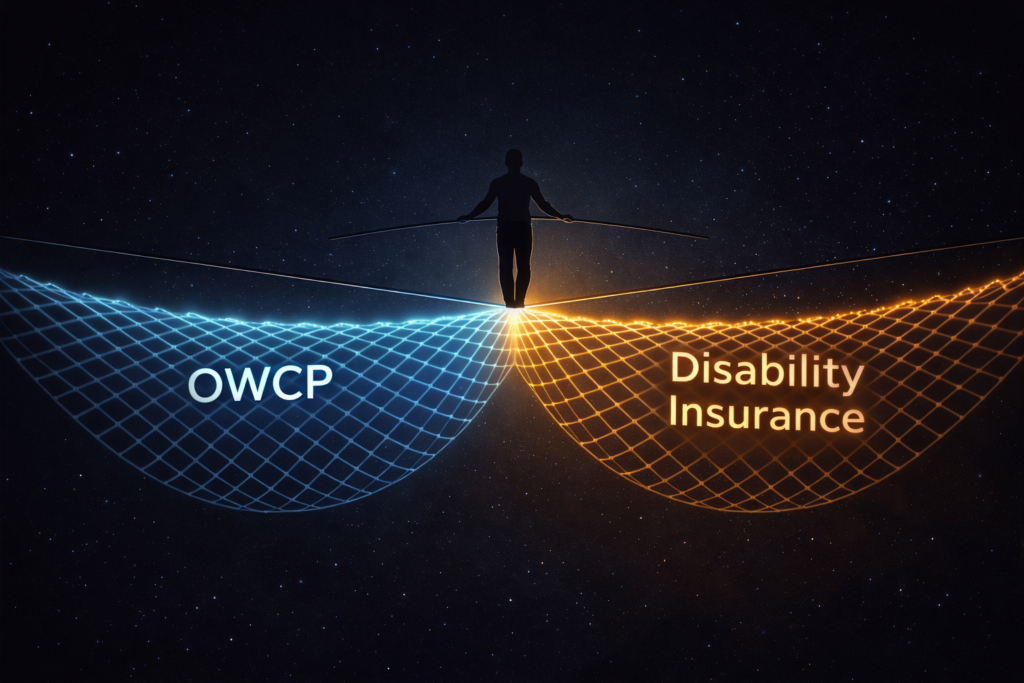
If you’ve been injured on the job or dealing with a serious illness, you’re probably asking a lot of practical questions right now. One of the most common ones from USPS employees is this: can you receive benefits from the Office of Workers’ Compensation Programs (OWCP) and a private disability insurance policy at the same time?
The short answer is yes — but there are important rules about how the two interact. Understanding those rules upfront can help you avoid surprises and make smarter decisions about your income protection.
What Is OWCP and What Does It Cover?
OWCP is a division of the U.S. Department of Labor. For federal employees, including those who work for the United States Postal Service (USPS), OWCP administers the Federal Employees’ Compensation Act (FECA) program.
When you’re injured on the job, OWCP can provide:
- Wage loss compensation (typically 66⅔% of your salary, or 75% if you have dependents)
- Medical treatment coverage related to the work injury
- Vocational rehabilitation if you’re unable to return to your previous role
OWCP benefits are specifically tied to work-related injuries or illnesses. They are not designed to cover off-duty conditions, pre-existing health issues, or non-occupational disabilities.
What Is Disability Insurance?
Disability insurance is a separate product that replaces a portion of your income when you can’t work due to illness or injury — regardless of whether it happened on or off the job.
There are two main types:
- Short-term disability insurance: Covers a portion of income for a limited period, usually weeks to a few months
- Long-term disability insurance: Provides income replacement for an extended period, sometimes until retirement age, depending on the policy
USPS employees can purchase private disability insurance policies independent of their federal benefits. These policies are designed to fill income gaps that OWCP and other federal programs may leave behind. If you’re new to how these policies work specifically for postal workers, this overview of postal disability insurance explained is a helpful starting point.
Can You Collect Both at the Same Time?
Yes, in many cases you can — but how they work together depends on the specific terms of your disability insurance policy.
How Private Disability Insurance Handles OWCP Benefits
Most private disability insurance policies include an offset provision. This means if you’re receiving OWCP wage loss compensation, your disability insurance benefit may be reduced by that amount to avoid paying you more than your pre-disability income.
Here’s a simplified example:
- Your base salary: $60,000 per year
- OWCP wage loss benefit: $40,000 per year (66⅔%)
- Your disability policy maximum benefit: $30,000 per year
- After the offset: The policy may pay the difference between what OWCP covers and your total covered benefit
The exact calculation depends on your specific policy language. Some policies offset dollar-for-dollar. Others have different formulas. Reading your policy — or having someone walk you through it — matters a lot here.
When There Is No Overlap
If your disability insurance policy covers non-occupational conditions and you’re out of work due to an illness or injury that OWCP does not cover, both benefits would not apply simultaneously. In that case, your disability insurance policy would be your primary income protection.
This is one reason why USPS employees often value having both layers of coverage. OWCP only steps in for work-related events. A disability policy fills the gap when the cause of disability falls outside OWCP’s scope.
What About LWOP and COP?
Two other terms come up frequently in these conversations.
Continuation of Pay (COP) is a provision under FECA that allows most USPS employees who file a traumatic injury claim (using Form CA-1) to continue receiving their full salary for up to 45 calendar days while their OWCP claim is being reviewed. COP is not compensation — it comes from the Postal Service, not OWCP.
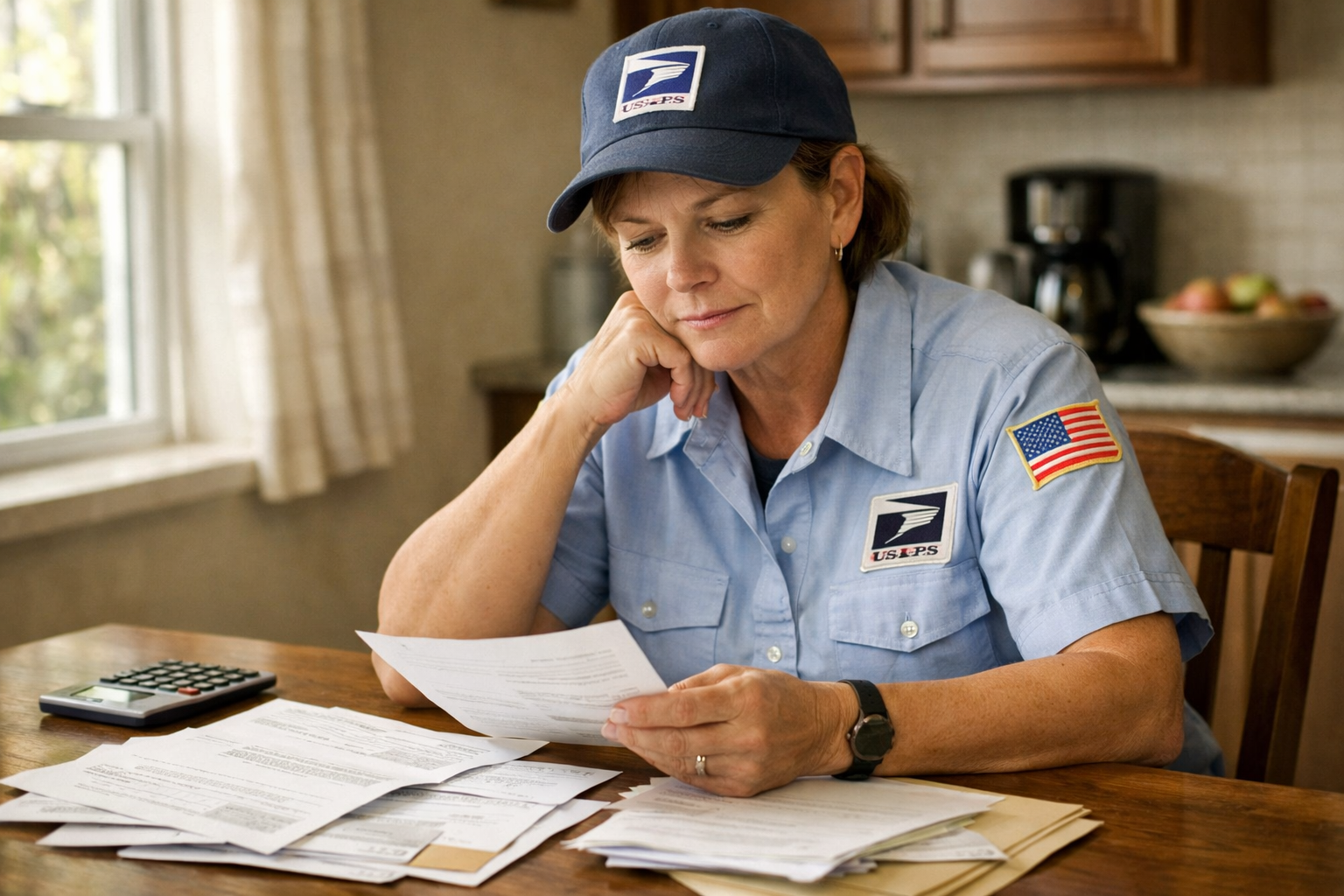
Leave Without Pay (LWOP) is what happens when COP runs out or is denied, and your OWCP claim has not yet been approved. During LWOP, you are not receiving a paycheck. This is exactly the kind of gap where disability insurance can make a real difference. Understanding how LWOP affects your pay, benefits, and retirement is worth reviewing — you can find a full breakdown in this guide on how USPS LWOP rules work.
During LWOP, a disability insurance policy may be your only source of income while you wait for a federal claim to process.
How the Claim Process Generally Works
Understanding the sequence of events helps you plan ahead.
Step 1: Report the Injury
If you’re injured on the job, report it to your supervisor as soon as possible. Delays in reporting can affect your OWCP claim.
Step 2: File the Correct Form
- CA-1 is used for traumatic injuries (a specific incident)
- CA-2 is used for occupational diseases or conditions that developed over time
Filing the right form matters. Using the wrong one can slow down the process.
Step 3: COP Period Begins
If your CA-1 is accepted, your COP period typically begins. You continue receiving pay for up to 45 days while OWCP reviews the claim.
Step 4: OWCP Reviews and Decides
OWCP will review your medical evidence, the claim form, and other documentation. Approval timelines vary. Some claims are approved relatively quickly. Others take longer, especially if additional medical information is needed.
Step 5: Wage Loss Compensation Begins (If Approved)
If your claim is approved and you remain unable to work, OWCP wage loss compensation replaces a portion of your salary at the 66⅔% or 75% rate.
Step 6: Disability Insurance Coordinates
If you have a private disability insurance policy, your insurance carrier will coordinate with OWCP benefits based on your policy terms. Some policies have an elimination period — a waiting period before benefits begin — which is another reason early planning is important.
What OWCP Does Not Cover
It helps to know where OWCP has limits:
- Non-work-related illnesses (heart conditions, cancer, mental health conditions unrelated to work duties)
- Injuries that occur off the clock or off postal property
- Conditions that existed before employment
If you become disabled due to one of these situations, OWCP does not apply. A disability insurance policy becomes your primary financial safety net in those cases.
For more information on OWCP and FECA benefits for federal employees, you can visit the official Department of Labor OWCP resource page at dol.gov.
A Few Things Worth Knowing
- Receiving both OWCP and disability insurance is legal and common among federal employees — as long as the disability policy’s coordination rules are followed
- Overpayment situations can occur if you don’t report OWCP benefits to your disability carrier, so transparency with your insurer is important
- Some USPS employees elect disability insurance specifically to cover the gap years between an injury and retirement eligibility, since OWCP benefits may not cover the full picture long-term
How Both Benefits Work in Your Favor
OWCP and private disability insurance are not mutually exclusive. For USPS employees, having both can create a more complete income protection strategy — especially when you consider how many conditions fall outside OWCP’s coverage, how long the claims process can take, and how much income can be lost during LWOP periods.
The key is understanding how your specific policy coordinates with federal benefits before you need to file a claim.
If you’re a USPS employee and you want to understand how disability income protection could work alongside your federal benefits, Postal Life and Disability Plans can walk you through your options. There’s no pressure — just straightforward information to help you make an informed decision before you ever need to use it. Visit postallifeanddisabilityplans.com to learn more.